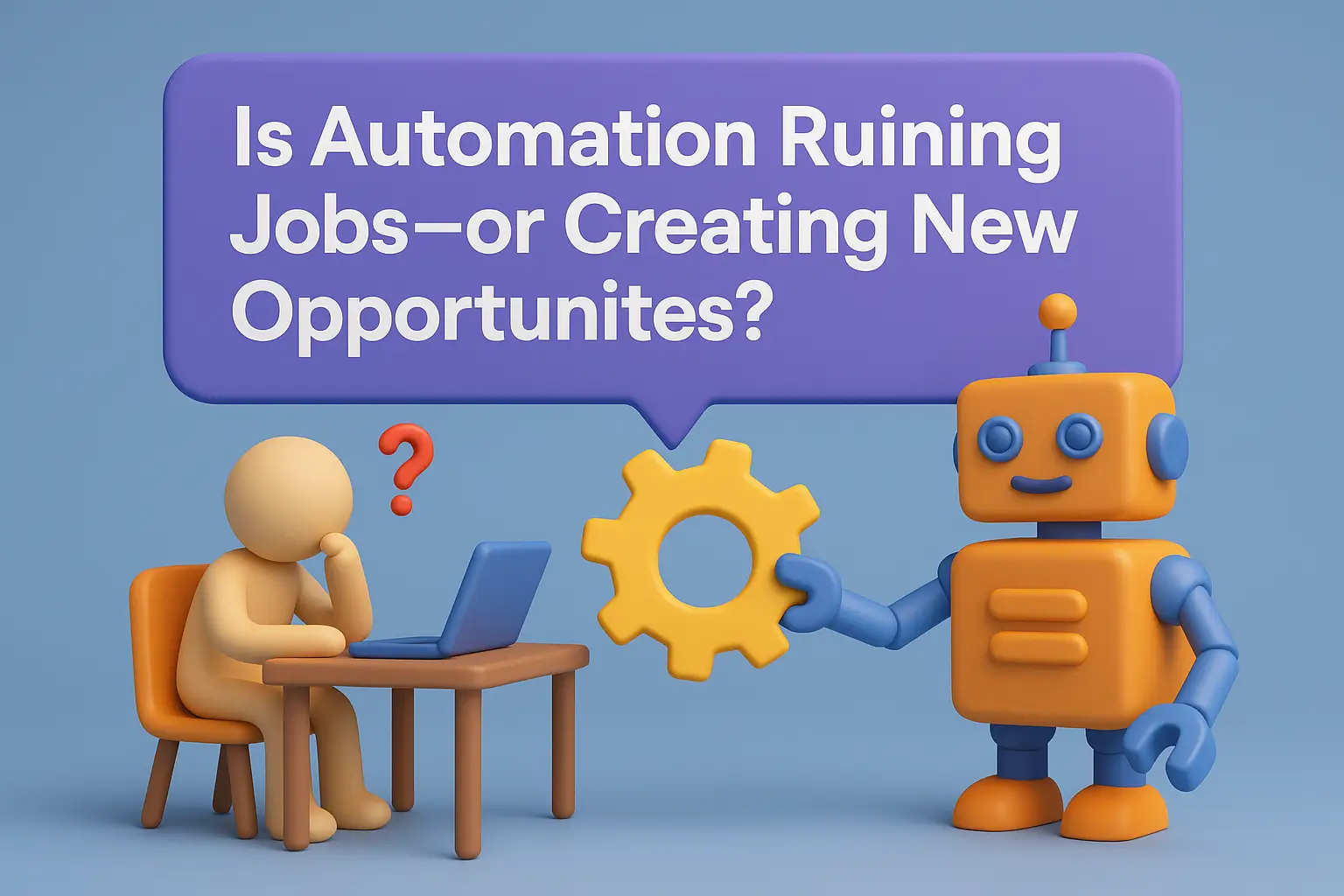
Understanding Automation and Its Impact
Automation refers to the technology-driven processes that replace human labor with machines or software to improve efficiency and productivity. This concept has evolved over time, from the mechanical innovations of the Industrial Revolution to the sophisticated artificial intelligence systems of today’s digital economy. Various forms of automation are present in numerous sectors, including manufacturing, agriculture, logistics, and services. For instance, robotics are widely utilized in factory settings for repetitive tasks, while algorithms and machine learning facilitate data-driven decision-making in finance and healthcare.
Historically, the introduction of automation has generated fear regarding job displacement, sparking debates about its potential negative impacts on employment. While initial industrial advancements led to significant workforce reductions in certain traditional roles, they also created the foundation for new jobs that emerged in response to technological advancements. As industries adapt, the transition often necessitates a re-evaluation of skills and training, pushing workers towards roles that require critical thinking, creativity, and problem-solving capabilities, which are difficult to automate.
As we stand today, the pace of technological advancement has not only accelerated the implementation of automation but has also broadened its scope. Innovations such as artificial intelligence, machine learning, and advanced robotics continue to redefine the boundaries of what automation can achieve. While concerns about job loss persist, it’s essential to recognize the potential for new opportunities that automation can bring. Many organizations are now focusing on integrating automation in a manner that complements human capabilities rather than wholly replacing them. This collaborative approach may lead to enhanced job roles that emphasize human skills alongside automated processes.
Jobs at Risk: Analyzing Automation’s Threat
The rapid advancement of automation technology raises significant concerns about its impact on various job sectors. Certain industries, particularly manufacturing and retail, have experienced considerable job displacement due to increased reliance on automated systems. In manufacturing, tasks once performed by skilled workers are now efficiently executed by machines and robotic systems. A case study in automotive manufacturing illustrates this trend; for instance, factories have adopted robotic arms for assembling vehicles, leading to a notable decrease in assembly line jobs. Between 2000 and 2010, nearly 1.5 million manufacturing jobs were lost in the U.S. alone, largely attributed to automation.
Similarly, the retail industry is not immune to automation’s reach. The rise of online shopping has seen traditional retail stores close, with technologies such as self-checkout machines and, more recently, cashier-less store models becoming prevalent. Data from the National Retail Federation indicates that on average, one cashier is replaced for every 15 self-checkout machines installed in a store. This shift poses a risk not only to cashiers but also to sales associates and stock clerks as stores streamline their workforce to reduce labor costs.
The roles that are particularly vulnerable to automation share common characteristics: they typically involve repetitive, predictable tasks that can be programmed or improved through technology. Workers in these positions often face challenges in reskilling, particularly if they belong to specific demographic groups, such as those with lower educational attainment or minimal access to training programs. Statistical evidence suggests that communities with a high concentration of at-risk jobs often also face socioeconomic challenges, compounding the effects of automation. As automation continues to permeate various sectors, it is crucial to acknowledge its potential for job displacement and work towards strategies that can mitigate its negative impacts.
New Opportunities: The Upside of Automation
As automation becomes increasingly prevalent across various industries, it is paramount to consider the potential positive outcomes that accompany this technological advancement. Rather than merely eradicating jobs, automation can lead to the creation of new job categories and a heightened demand for skills that complement machines. This paradigm shift opens the door to various opportunities that focus not on replacement but on enhancement and integration of human talents with automated processes.
Numerous case studies illustrate how companies have successfully adopted automation while simultaneously expanding their workforce. For instance, automotive manufacturers like Tesla have integrated robotics into their assembly lines, allowing for greater efficiency and precision. While these robots perform repetitive tasks, the demand has surged for skilled technicians who can maintain and optimize these machines. These new positions cater to a blend of technical and analytical skills, showcasing how automation cultivates roles that may not have existed previously.
Furthermore, industries such as healthcare have made significant strides through automation. Technologies like telehealth services and robotics in surgery allow medical professionals to focus more on patient care rather than routine tasks. Consequently, this has led to the emergence of new roles in healthcare technology management, requiring a blend of clinical knowledge with technological expertise. Education and training programs have begun to emphasize these necessary skills, equipping current and future workers to adapt to an automated environment.
Ultimately, the narrative surrounding automation should evolve from one of fear regarding job losses to embracing the transformative potential it has to create new opportunities for skilled labor. By aligning educational paths and training initiatives with the needs of an increasingly automated workforce, both individuals and organizations can thrive in a landscape of innovation and progress.
Navigating the Future: Balancing Automation and Employment
The rise of automation has undeniably altered the landscape of employment, prompting individuals, businesses, and policymakers to reconsider their strategies in adapting to this evolving environment. As machines take on more repetitive tasks, the need for human labor in certain roles diminishes; however, this situation also presents opportunities for innovation and growth. To navigate this transition successfully, proactive measures are essential.
One of the most effective strategies for individuals is to invest in upskilling and reskilling initiatives. Engaging in continuous education through online courses, workshops, and training programs can equip workers with the necessary skills that align with emerging industry demands. Industries driven by technology—such as information technology, healthcare, and renewable energy—will require a workforce adept in advanced skills. Lifelong learning not only enhances employability but also fosters adaptability to rapid changes within the job market.
Businesses, on the other hand, should proactively create an environment that embraces change. Implementing training programs for existing employees to help them transition into new roles driven by automation can mitigate potential layoffs. By focusing on human-centric job roles—such as strategic decision-making or emotional intelligence—organizations can harness the strengths of their workforce while integrating advanced technologies. This symbiotic relationship between automation and human skills can lead to improved productivity and innovation.
Furthermore, policymakers play a pivotal role in supporting displaced workers through various initiatives. Employment protection schemes, retraining programs, and collaboration with educational institutions can help workers adapt to new demands. A framework that incentivizes businesses to invest in their workforce can enhance stability in the job market. It is crucial for government bodies to recognize the impacts of automation and act as facilitators of education and support, enabling workers to thrive in a technology-oriented future.
In conclusion, balancing automation with employment is a multifaceted challenge that requires a concerted effort from individuals, businesses, and policymakers alike. By embracing comprehensive strategies focusing on skills development and support systems, stakeholders can empower workers to navigate the evolving job landscape effectively.